
Leadership at a time of radical uncertainty
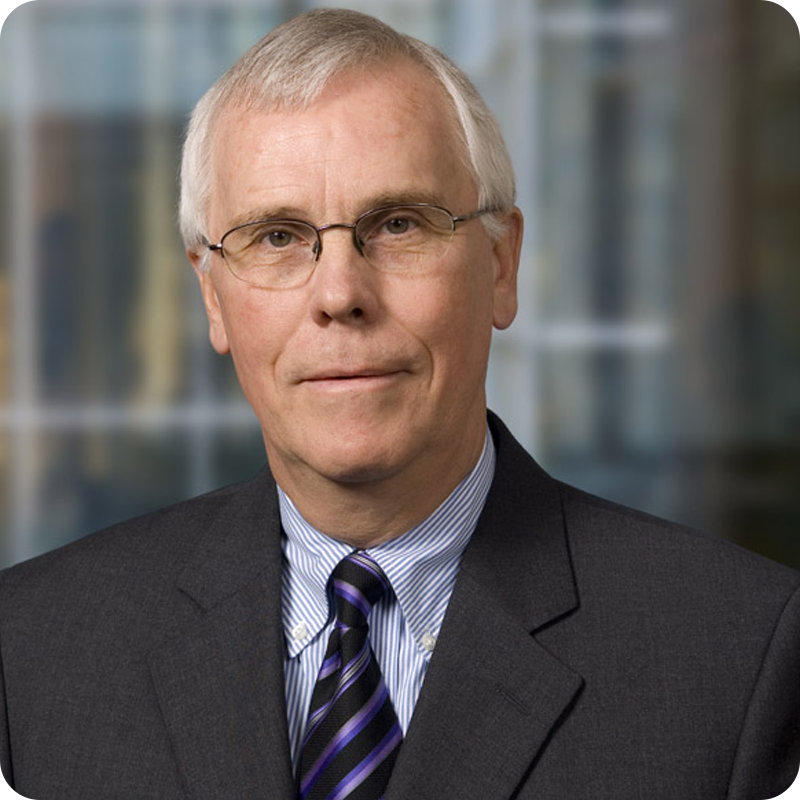
Paul Jenkins
Magnet Advisory Board Member
Former Senior Deputy Governor, Bank of Canada
Below are Paul Jenkins’ extended thoughts on his recent op-ed in the Globe and Mail, “Are Canada’s leaders up to the task in this world of radical uncertainty?“ In contrast to the confrontational and centralized leadership styles of Donald Trump and Xi Jinping, Jenkins outlines how Canada’s leaders can instead adopt principles that build trust among Canadians and preserve our interests as an open, liberal democracy.
Radical uncertainty refers to a situation where one cannot know all the information needed to estimate the probability of something happening. In contrast, the concept of risk applies to situations where the outcome of a given situation is not known, but where one can, with some degree of confidence, measure the probabilities or odds of an event happening.
Today, permanent uncertainty seems to be the global default scenario with a rapidly changing world order, accelerating technological change, pandemics, the unpredictability of war…and so much more.
Put differently, we are living through an era of radical uncertainty defined by the speed, scale, and simultaneity of change.
What type of leadership does this demand? To answer that question, one needs to define today’s world and the principles around which we can then judge the values of leadership we need.
Defining today’s world
In the aftermath of WWII, the system of Bretton Woods Institutions was put in place to manage and govern the global economy, largely from the perspective of the western world, at the time accounting for some 60 percent of the global economy.
Throughout the postwar period, tensions inherent between the sovereign state and the need for collective global governance increasingly challenged this post WWII order. Effectively, a new world order began to unfold, driven largely by the rise of China.
Still, from 1948 to 2000 the global economy grew at an unprecedented annual rate of nearly 4 percent with major advances in the overall economic well-being of the developed and developing world. By 2000, a marked reversal had occurred with the developing world’s share of the global economy having risen sharply to nearly 60 percent. With that, these countries increasingly voiced views about the hegemonic, US dominant, world order and its governance.
Over these years, two other trends also began to unfold below the surface that remain with us today—a growing inequality of income and wealth within many countries, and large and persistent trade imbalances across countries.
The first of these has accelerated into this century because of the technological revolution—most recently, of course, AI. In contrast to the Industrial Revolution, the technological revolution has been both faster and more widespread. Similar to the Industrial Revolution, it will take time before we reap the full benefits of the AI revolution and, relatedly, see the shared prosperity of a more equal distribution of income and wealth, which we need to ensure is forthcoming.
The second of these—persistent trade imbalances—is purportedly the main rationale for the US Administration’s widespread, highly unpredictable tariff policies designed to reverse their chronic trade deficits, primarily with China. For certain, China’s overreliance on trade and reluctance to promote domestic demand has been a major contributor to global tensions around trade imbalances. However, US tariff policies are not an effective policy tool to reduce their trade deficit. These policies have both added inflationary costs to US consumers and businesses and fractured the post WWII global trading system.
On the geopolitical front, economic and security tensions are reshaping alliances, climate change is imposing both physical and financial uncertainties, and democratic institutions in many countries are under strain. Add to that the conflicts in the Middle East and in Ukraine.
This convergence of economic and political forces defines today’s world of radical uncertainty: a situation in which the future cannot be reliably predicted because the underlying systems themselves are shifting.
Where to stand
For many, an effective leader demonstrates several essential traits. Among others, these attributes would include vision, integrity, decisiveness, accountability, communication skills, and courage.
Yet a central lesson from our experiences over decades—whether political, business or academic—is that leadership is situational.
Nelson Mandela’s stand against apartheid, John Maynard Keynes’ policy insights in response to economic downturns, and Alan Turing’s codebreaking during WWII are all examples of world leaders responding to situations facing them.
But situations alone cannot define the success of a leader. It is the principles a leader uses to navigate any given situation that will be the ultimate deciding factor of success.
Today we have stark contrasts in world leadership, primarily due to competing principles. The G2—China and the United States—offer vivid examples.
President Trump’s style of leadership is highly personal, confrontational and unpredictable. While Trump may view his style as a demonstration of political strength, it has been a major source of uncertainty, and thus instability, for the global and US economies. He argues that free trade weakened American manufacturing, hollowed out industrial communities, and empowered strategic rivals, especially China. However, his policies on tariffs, trade protection, economic confrontation with both allies and rivals, and attacks on multilateral as well as domestic institutions lack a unifying set of principles and risk democratic erosion within the United States.
President Xi Jinping’s style of leadership prioritizes the principles of central control, long-term planning and state-directed national development. From outside, Xi’s approach is seen as an attempt to convey a sense of the importance of stability, achievable only through central control. Yet with the state guiding capital allocation, technological priorities, infrastructure investment and strategic industries, individual enterprise becomes subordinate to political authority. Internally these constraints of centralized authority risk the erosion of China’s social fabric.
These two examples stand in contrast to the set of principles liberal democracies are built on: constitutional government, rule of law, protection of individual rights, institutional accountability, freedom of expression, and pluralism. This is a difficult balance to achieve, and when it is not, such as when trust in institutions is lost, other forms of leadership become highly attractive. Between 2000 and 2025 (according to the Varieties of Democracy Institute) the percentage of liberal democracies (among a data set of 195 counties) declined from around 22 percent to 16 percent.
One of the most challenging aspects of leadership in a world of radical uncertainty is maintaining legitimacy over time. Whether President Trump, President Xi, or the leaders of liberal democracies, policies and decisions under uncertainty will inevitably produce outcomes that differ from expectations. And there will be clear failures because of bad policy choices.
What we need
A world of radical uncertainty elevates the importance of purpose. People look to a leader—in politics, business, academia, or otherwise—for meaning.
This demands a unique set of instincts in today’s uncertain world:
- Communicating clarity of purpose through powerful narratives.
- Accepting that radical uncertainty is not a temporary disruption but a permanent feature of the modern world.
- Guarding against a false sense of certainty.
- Demonstrating an ability to adapt without losing direction.
- Projecting resilience in response to unanticipated shocks and disruptions.
- Understanding that global uncertainties underscore the importance of strategic realism in seeking opportunities for global cooperation.
What shapes these instincts in responding to uncertainty are a leader’s principles. However, it is a leader’s moral compass that then provides consistency in following one’s principles. Moral leadership can also create trust, and trust is one of the most valuable assets of society. When people trust their leaders, they are more willing to tolerate the implications of uncertain times.
Oh Canada
This world of radical uncertainty and shifting economic and political systems has profound implications for Canada and its leaders.
The unpredictability of the future and the breakdown of assumptions that in the past anchored these systems has put Canada on a multi-year path of major economic and political disruption and transformation. The changing world order, AI revolution, global security threats, climate change, and erosion of democratic norms all point to the need to embrace change and discard legacy strategies.
But change of a principled nature. Removal of interprovincial trade barriers, adoption of new technologies to drive new business models and products, and new funding models for post-secondary institutions are just a few examples of where principled, strategic change is needed.
For Canada to navigate this change successfully will depend crucially on the collective principles that its leaders across all sectors and regions bring to these challenges. Clarity of common purpose, acceptance of uncertainty, resilience and adaptability, and realism are the instincts Canadian leaders need to display.
This amounts to Canada’s leaders, individually and collectively, communicating to Canadians through a compelling narrative and a clear sense of who we are and what our interests are as an open, liberal democracy.