How Cultural Support Can Help Indigenous Students Navigate the Post-Secondary Experience
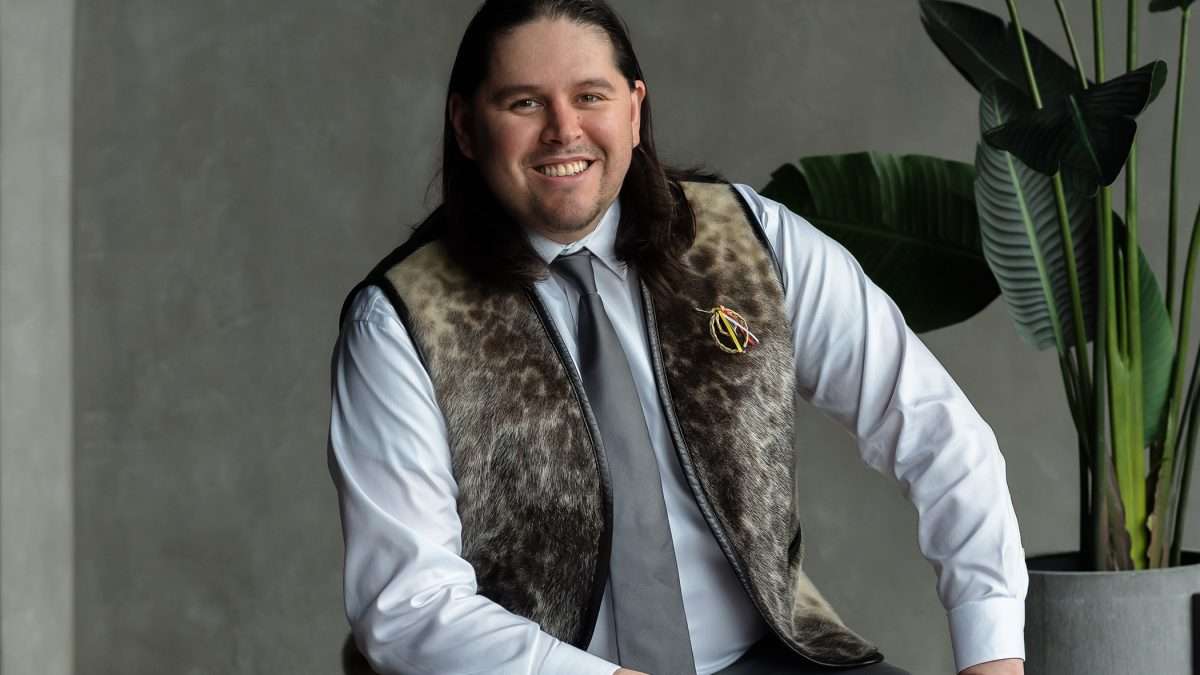
In 2016, Magnet produced a video series featuring one of our partner projects, Lakehead University’s Coordinated Learning Access Network (CLAN), a skills training and employment-readiness program targeting Indigenous youth. Among the subjects was Michael Etherington, now an accomplished speaker and Indigenous Relations consultant, and manager at The Gord Downie & Chanie Wenjack Fund in Toronto. Magnet recently caught up with Etherington to look back on his time at Lakehead and learn more about his current role.
Michael Etherington never saw himself becoming a sought-after trainer and consultant on Indigenous relations. He didn’t imagine being targeted for a management role in reconciliation at an Indigenous charity. He left high school intending to go to college and train for a career in policing, but his mother talked him out of it, and urged him to go to university instead.
He ended up at Lakehead, enrolled in Kinesiology, but the program didn’t really resonate with him. Lonely and isolated, far from family, Etherington found both solace and possibility when he started making use of cultural support programs for Lakehead’s Indigenous students, and engaging himself with the university’s Indigenous Learning department.
“A lot of people can’t visualize the internal struggles when you’re away from home and kind of almost mindlessly just trying to figure out the path you’re going to take,” Etherington says. “Those types of programs can help you stay grounded.
“That’s also where I became exposed to broader Indigenous narratives. It made me think about where I’m from, things like that. It helped me have a bit more balance.”
Even so, life at Lakehead wasn’t always easy. After his third year, struggling with the impact of multiple suicides among his extended family, Etherington left school and went to live with his parents for a while, then relocated to Toronto. Again, his mom offered a valuable assist, alerting her son to a job opening at the Ontario Federation of Indigenous Friendship Centres and encouraging him to apply despite his concerns about a lack of experience and qualifications. He soon found he was more qualified than he thought.
“In the interview process, I started interviewing the interviewees, because I had questions about how they were interpreting culture,” Etherington recalls with a chuckle. “I didn’t know I had the type of knowledge that was starting to come out. That’s how I got hired, and the rest is history.”
In the decade since, Etherington has crossed the globe to speak and lead sessions about Indigenous relations and cultural awareness with countless groups, both young and old. His work attracted the attention of The Gord Downie & Chanie Wenjack Fund, a charity that promotes reconciliation between Indigenous and non-Indigenous peoples. Last fall, the Fund’s executive director offered Etherington a new role, Manager of ReconciliACTIONS.
“There’s no predecessor I have to follow, so I have a bit more leeway,” Etherington says. “I describe myself as a bridge builder, and I’m part of the preliminary process on how that space is created, how these connections are being made.”
He’s also spent the past two years working on a book, Reconciliation is not Dead; Finding Your Voice, Finding Your Story. Due out next spring, it’s part guide to the challenges of reconciliation, part personal reflection on the lessons and teachings Etherington has learned so far.
Reflecting on his time at Lakehead, Etherington says the cultural support that helped him find his path remain invaluable by creating better outcomes for other Indigenous students, including those who may be unsure of themselves or their place, or struggling with being away from the familiarity of home.
“Some people may be suffering alone, and then other people don’t even know,” Etherington says. “That support is a big aspect that helps ensure emotional well-being, spiritual well-being, to help them know what they’re doing and why they are there. It was something I sorely needed.”
By embracing workplace diversity, employers of all sizes can promote innovation and creativity, improve hiring and retention, and increase productivity and profitability.
Magnet’s free self-identification tool can help employers reach qualified candidates from equity-seeking groups. When employers share an opportunity through Magnet, a single click can send the posting to job seekers who meet the requirements and have self-identified as a diverse candidate.