• Search
    MagnetMagnetMagnetMagnet
    EN
    • About
      • Our Story >
      • Vision & Mission >
      • Leadership >
      • Advisory Board >
    • Partnerships
      • Government Solutions >
      • Industry >
      • Enterprise >
      • Community >
      • Technology & Integration Partners >
    • Magnet Library
      • Publications >
      • Blogs & Articles >
      • Project Profiles >
    • Products & Services
      • Mark Patterson Speaking Engagements >
      • Data & Technology Solutions >
      • Magnet Network Live >
      • Segments of Service Offerings >
      • Community Hubs >
      • Incubation, Training & Consultation >
      • Maintenance & Development >
    • Connect With Us
      • General/Media Inquiries >
      • Looking for Work? >
      • Looking to Hire? >
      • Login to my Account >
              No results See all results
              • Home
              • news & articles
              • Blog
              • AI governance as infrastructure, not afterthought 
              string(4) "post"
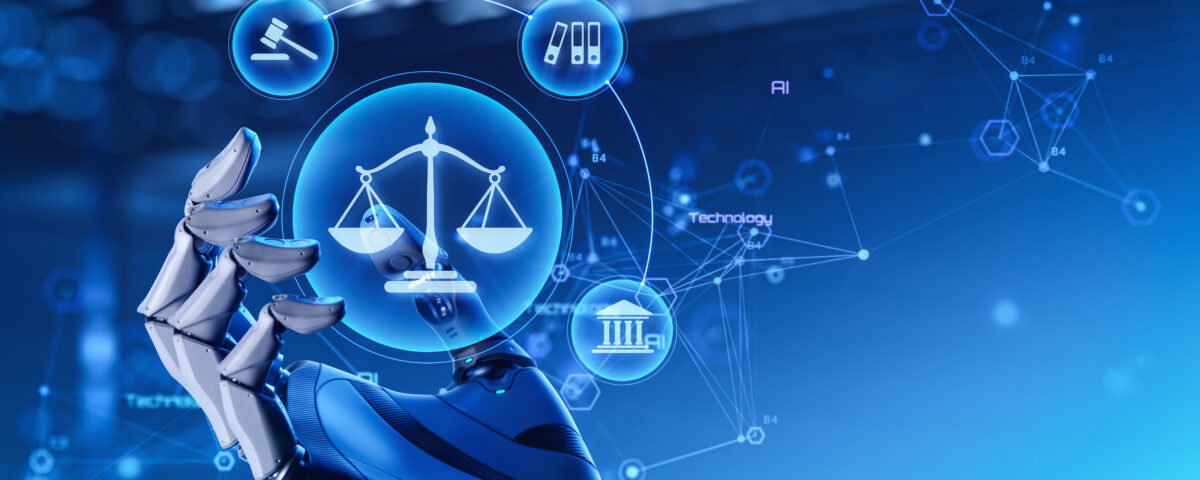
              Robot Hand Holding Digital Scales of Justice in Futuristic Legal Technology Concept

              Robot Hand Holding Digital Scales of Justice in Futuristic Legal Technology Concept.

              AI governance as infrastructure, not afterthought 

              October 26, 2026
              Categories
              • Blog
              Tags
              • AI
              • Ai governance
              • Future of Work

              Every quarter, Magnet’s AI adoption work reaches a different mix of audiences, from businesses to skills development leaders. This series highlights the key AI challenges and opportunities that surface through those conversations. 

              Oversight bodies are beginning to ask a different question about AI than they were a year ago. Rather than focusing primarily on risk containment, many are looking to make governance an ongoing part of daily operations that’s integrated from the start. Two engagements from the previous quarter came from bodies whose core function is oversight. A privacy officers’ council asked for a session specifically on designing privacy-enabled operations, distinct from a compliance checklist. In addition, a major public insurer’s career conference made room for AI and future-of-work content as part of a career-focused event.

              The privacy officers’ council requesting an operational framing rather than a risk-mitigation one suggests these professionals already see AI governance as something built into how work gets done, rather than added afterward to manage exposure. The public insurer raising AI and the future of work inside a career conference, rather than a separate technology briefing, suggests the topic has moved from a specialist concern toward something more central to how organizations in that field  think about their own workforce.

              Both point to a broader shift to AI as a critical component of operational infrastructure and away from managing risks at arm’s length. Governance-focused and public-delivery audiences increasingly treat AI as operational infrastructure rather than a risk managed at arm’s length. That distinction carries real weight. Risk management tends to treat AI governance as a constraint applied after the fact. Operational thinking treats it as infrastructure the rest of the work depends on from the outset. Institutions that develop the second approach well tend to move at a steadier pace over time, since workers and the public they serve aren’t left guessing at the rules mid-process.

              The phrase “human in the loop” deserves closer scrutiny than it typically receives in these conversations. A human present in a process carries a different meaning than a human equipped with the standing and context to meaningfully challenge that process. Oversight without genuine authority to intervene can function more as a formality, a sign-off step that carries the appearance of accountability without much substance behind it. That gap matters especially for public institutions, where the consequences of a failure tend to surface directly and visibly rather than being absorbed quietly.

              For governance leaders and public-sector policymakers, the takeaway is to build oversight structures around genuine authority to challenge and intervene, rather than around visible sign-off steps alone. A named reviewer without the standing, context, or backing to push back on a system’s output functions more as a liability than a safeguard. Institutions that treat AI governance as core infrastructure now, rather than as a compliance layer added later, will likely be better positioned to sustain public trust as adoption continues to scale.

              Canada’s institutional position is relevant here as well. Relatively high public trust, combined with a long-standing habit of collaboration across government, employers, and civil society, gives responsible AI governance a stronger foundation here than in many peer countries. Sustaining that advantage requires deliberate effort, though, through clear rules, genuine accountability, and structures built to hold up under scrutiny rather than serve as symbolic gestures toward responsible use.

              In summary:

              • Governance-adjacent and public-delivery bodies are increasingly framing AI oversight as operational infrastructure rather than a compliance exercise.
              • Treating governance as infrastructure built in from the start tends to move faster and create less friction than treating it as a constraint applied after deployment.
              • Canada’s institutional trust and collaborative tradition are genuine assets, but they require deliberate governance work to convert into lasting advantage.

              Share

              Related Reading

              Beyond the tools: What leadership really requires in the AI era 

              Leadership at a time of radical uncertainty

              Business team in modern boardroom engaging with glowing digital data streams on table surface representing advanced technology and collaborative data-driven corporate strategy execution

              The future of work: why disruption is really a sign of opportunity

              Magnet
              • About Us
                • Our Story
                • Vision & Mission
                • Leadership
                • Advisory Board
              • Partnerships
                • Government Solutions
                • Industry
                • Enterprise Partnerships
                • Community
                • Technology & Integration Partners
              • Magnet Library
                • Mark Patterson Speaking Engagements
                • Data & Technology Solutions
                • Magnet AI
                • Magnet Network Live
                • Segments of Service Offerings
                • Project Incubation, Training & Consultation
                • Maintenance & Development
              • Connect With Us
                • General/Media Inquiries
                • Looking for Work?
                • Looking to Hire?
                • Login to my Account
              © 2026 Magnet, Toronto Metropolitan University. All Rights Reserved.
                • Contact
                • Technical Support
                • Terms & Conditions
                EN
                • No translations available for this page
                  Man VS. Machine

                  As AI becomes increasingly powerful, our distinctly human capabilities become more valuable. Mark explores why judgment, discernment, intuition and agency remain essential advantages, and why developing these capabilities will help us navigate a future shaped by rapidly advancing technology.

                  Runtime • 03:35

                  Capability Stack

                  Your skills are part of what you do, but they do not define who you are. Mark explores why anchoring our identity in deeper capabilities like problem solving, adaptability and systems thinking can help us confidently navigate changing technologies and careers.

                  Runtime • 03:43

                  Cognitive Gyms

                  As AI takes on more of our everyday thinking and work, how do we continue developing judgment and wisdom? Mark explores the idea of “cognitive gyms,” intentional ways to exercise our thinking, strengthen human capabilities and build experience in the AI era.

                  Runtime • 03:04

                  Adaptive Human Potential

                  Adaptability requires more than learning new skills. Mark explores the continuous cycle of sensing change, realigning our capabilities and putting them into action, while building a future grounded in trust, inclusion, meaningful work and the confidence to embrace new possibilities.

                  Runtime • 03:20

                  Episode 07: Building a Skills-First System

                  With: Dr. Soon Joo Gog – Institute for Adult Learing Singapore

                  Runtime • 38:35
                  Episode 06: Learning isn’t Content Consumption

                  With: Candice Faktor – Disco

                  Runtime • 43:29

                  Episode 05: The Inequality Problem Persists

                  With: Dr. Tracey Burns – National Centre on Education and the Economy

                  Runtime • 34:11
                  Episode 04: Beyond the Degree

                  With: Dr. Asheley Jones

                  Runtime • 29:52
                  Episode 03: Where Talent Meets Opportunity

                  With: Matt Sigelman – Burning Glass Institute

                  Runtime • 38:59
                  Episode 02: Education in Deadlock

                  With: Craig Robinson – Deloitte Canada

                  Runtime • 32:12
                  Episode 01: National Goals, Local Solutions

                  Featuring: Noel Baldwin – Future Skills Centre

                  Runtime • 38:00