

Ukrainian Canadian Congress connects newcomers to housing, jobs, and community
By: Mackenzie Currier
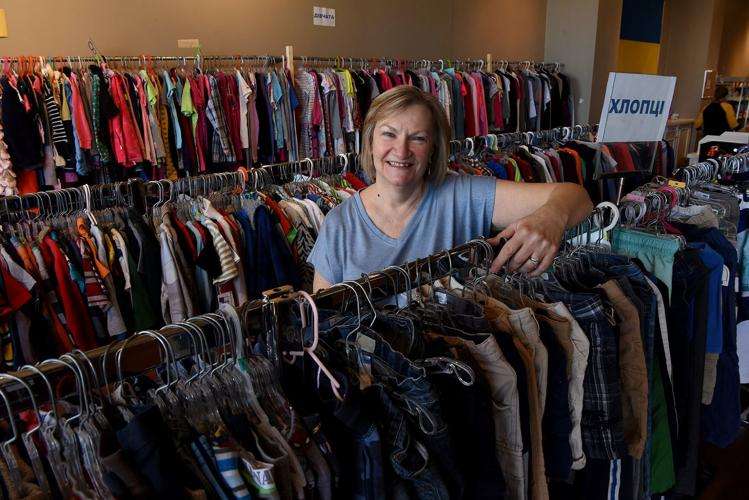
Luba Tarapacky rushed to the hospital with a pregnant store patron she feared was having a stroke. She stayed for six hours in the emergency room, doing her best to support the woman and her husband. This young couple were Ukrainian newcomers with no support system in Canada except for each other. Like many of those displaced by the war, they came to the Ukrainian Canadian Parachutes, a volunteer-run Toronto storefront that collects donations to offer Ukrainian newcomers free household items and clothing.
The Ukrainian Canadian Parachutes helps displaced people settle in Canada
Tarapacky is on the board of directors of the Ukrainian Canadian Congress (UCC) Toronto branch and opened the Ukrainian Canadian Parachutes by Sherway Gardens as a UCC project. The Congress brings together all the national, provincial and local Ukrainian Canadian organizations to lead, coordinate and represent the interests of the Ukrainian Canadian community.
The idea for the Ukrainian Canadian Parachutes came when one of Tarapacky’s fellow volunteers realized that no one was accepting and distributing donations. They decided to create multiple storefronts across Toronto to help the influx of displaced people settling in Canada like the young couple. “This program was created for them. They come with literally a suitcase and barely even that,” she says.
Of the people who Tarapacky talks with at the storefront, many come to Canada without work and are desperately searching for jobs. Though Ontario has accepted more than 40,000 Ukrainian newcomers, not everyone is being housed individually, and therefore the need for work to afford Canada’s high cost of living surged.
Support for newcomer jobs and housing
Tarapacky mentions that the Canadian Red Cross is receiving donations from the government to help house newcomers in a hotel for a few nights with the hope newcomers can find their own accommodations after said time. Unfortunately, not all newcomers are so lucky.
UCC is helping to fill the gaps, personally housing newcomers for longer stretches of time and lobbying the government for job and housing assistance. Canadian Ukrainian Parachutes will specifically post job offers on a board at their warehouse and communicate with restaurants that reach out for workers. However, with the storefront being completely volunteer-run and donation-focused, there are limits to what can be done. Tarapacky suggested job seekers also connect with Ukrainian Social Services and CUIAS Immigration Services.
The subject of work came up when Tarapacky and the young couple were talking and Tarapacky learned the husband had secured a job in Information Technology. He is not alone in this sector, with many Ukrainians working in the technology industry. “There’s a resource of people coming that are (technologically adept),” says Tarapacky. She spoke passionately about the value that newcomers sharing their skills brings to the Canadian economy and hopes Canadians will understand and support these valuable new citizens.
How you can help
The pregnant store patron Tarapacky brought to the hospital has since recovered and is supporting Ukrainian Canadian Parachutes by volunteering. She has chosen to give back to the people and community that helped her get settled.
If you’re interested in helping the Ukrainian Canadian Parachutes, donating funds to UCC and providing donations of things like pillows, sheets, kitchen utensils, plates, and cookware to the various storefronts are extremely helpful.
